


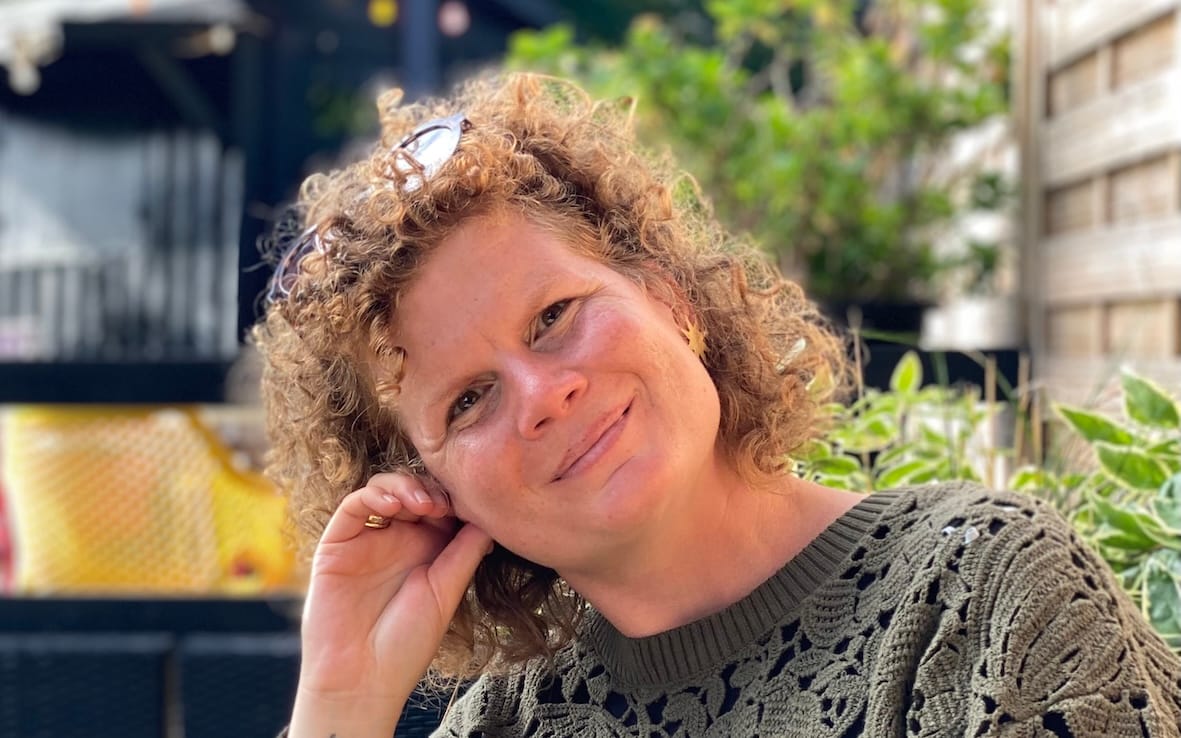
We’ve been talking to… Mara Marxt Lewis
“Climate action isn’t about sacrifice—it’s about caring for this wild and precious place we call home.” Mara Marxt Lewis – artist
At Open Road we’re passionate about storytelling and giving people voice. We believe that understanding the past can inspire change in the here and now and help build a better future. We regularly have inspiring conversations with remarkable people through our work who are using storytelling to drive change. We’ve created We’ve been talking to… to share these conversations – the learning and the inspiration. Let us know if there is anyone we should be talking to.
Tell us about who you are and the work you are currently doing?
I’m a socially engaged environmental artist, and I’ve spent the last decade or so creating participatory projects that really connect communities with nature. I call it “making sense of place” – it’s about deeply immersing myself in landscapes and becoming part of the community and forming relationships, rather than just simply leading a project or doing an artwork. I have an MA in Art & Social Practice from the University of the Highlands and Islands, and what drives my work is the idea of radical transparency and collaboration. I’m not interested in only creating traditional art objects; for me, the social encounters themselves become the artwork.
Right now, I’m working as the Creative Changemaker for Climate Action at Aberdeen Performing Arts (APA), which is a really great role. What I’m doing there is developing climate-focused programmes – not just for our internal teams, but for the wider communities we work with. The real challenge, and what makes it meaningful, is helping people engage with climate change as something intimate and local, rather than this overwhelming abstract crisis that feels impossible to tackle.
A big part of this work is about building intergenerational connections and creating spaces where communities can actually voice their experiences and concerns about environmental change. We’re just launching a pilot project called Green Stage Aberdeen, which I’m really proud of. Essentially, we’re giving every employee five paid hours each month to integrate climate action into their existing roles – whether that’s through community projects, environmental partnerships, or upcycling initiatives. The whole point is to make sustainability feel like a natural extension of what we already do, rather than just another box to tick or burden to carry.
We’re living in a time of rapid change, what story from the past do you think it’s important to preserve?
I keep coming back to the herring lassies of Scotland. These women followed the fishing fleets up and down the coast, gutting and packing herring from dawn until dark. What strikes me isn’t the hardship—it’s the community they built. They worked in crews of three, sang work songs together, looked after each other’s children, negotiated collectively for better rates.
This was part of a broader Scottish tradition of commoning—managing resources collectively, putting shared interests above individual gain. As historian Peter Linebaugh writes, “Commoning is the web of the shared relations of people, each other, and their shared environment.” In crofting communities and fishing villages, there was this fundamental recognition that your wellbeing and mine are bound together.
Why preserve this now? Because we’re told constantly that individualism is natural, that community is nostalgic. But these stories show us we’ve organised ourselves differently before. Suzanne Lacy describes socially engaged practice as work that “uses aesthetic strategies in collaboration with communities to effect change.” Remembering the herring lassies is itself socially engaged practice—keeping alive a model of collective care and resilience.
In our moment of atomisation and climate crisis, these stories aren’t relics. They’re blueprints that remind us, as Gwendolyn Brooks wrote, “we have always been each other’s harvest; we have always been each other’s business.“
What’s on your mind right now?
Right now, I’m thinking a lot about climate biennales. I’ll be presenting in Vienna in 2026, and I’ve been following another developing one in Asturias, Spain. But what really occupies me is imagining a climate biennale for Scotland—one built on genuine collaboration, where art venues and community spaces across the country actually support each other rather than compete.
There’s something Rebecca Solnit writes that keeps returning to me: “The desire to go home that is a desire to be whole, to know where you are, to be the point of intersection of all the lines drawn through all the stars.” I think about this in relation to what a Scottish biennale could be—not just another arts festival, but something rooted in genuine partnerships and communities recognising themselves in the work.
Underneath all of this is what I’ve been calling the art of commitment—showing up, consistently. That connects directly to reciprocity and belonging. These biennales are testing grounds for whether we can practice what we’re saying about the climate crisis: that we’re interconnected, that transformation requires us to show up for each other, again and again.
Looking three years into the future, what changes would you like to see?
When I think about where I’d like us to be in three years, both through my work as the creative changemaker for climate action at APA and as someone living here, it’s really about shifting how we understand climate action. I want to see it woven into everyday life in Aberdeenshire and Aberdeen—not as something we have to do, but as something that just makes sense.
“Tell me, what is it you plan to do with your one wild and precious life?” Mary Oliver
There’s a Mary Oliver quote that captures this perfectly: “Tell me, what is it you plan to do with your one wild and precious life?” Climate action isn’t about sacrifice—it’s about caring for this wild and precious place we call home.
I’d love to see genuine commitment to behaviour change in our community—not from guilt, but because people want to show up for nature and each other. Imagine neighbours sharing resources, community gardens thriving across Aberdeenshire, local businesses championing sustainability because it’s just what we do here.
In three years, I want climate action to feel less like a burden and more like an opportunity—a way of connecting and building something better together.
Is there anything else you’d like to share.
Yes, definitely! I’m always excited to connect with people who are interested in what I’m working on. Whether you’re curious about my projects, thinking about potential partnerships, or just want to explore ideas for collaboration, I’d love to hear from you.
The best way to reach me is through my work email: maramarxtlewis@aberdeenperformingarts.com. Don’t hesitate to drop me a line—I’m open to conversations and seeing where creative connections might lead.